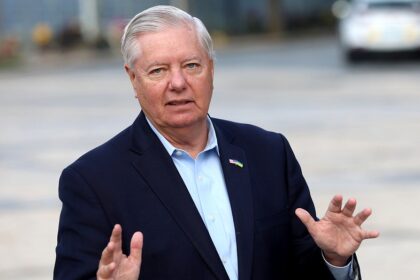
President Donald Trumps remarks on the sidelines of the NATO Summit in Ankara, Turkey, may represent one of the most consequential shifts in Americas strategic language toward the Islamic Republic of Iran since the 1979 revolution.
By warning that any new Iranian attack would trigger a far more devastating response â and by describing the regime as a “cancer” that must be removed â Trump signaled something that goes beyond conventional political rhetoric. In the language of national security, such terminology often reflects a fundamental change in how a threat is defined.
For more than four decades, U.S. policy toward the Islamic Republic has centered on containment and deterrence. The underlying assumption was that Tehrans behavior could be influenced, constrained or made more costly. Trumps remarks suggest a different premise: the issue is no longer merely the regimes behavior, but the system itself. The objective is no longer to manage the crisis, but to eliminate its source â raising once again the prospect of regime change as a strategic outcome.
ROBERT MAGINNIS: TRUMPS ANKARA REMARKS REVEAL A GRAND STRATEGY HIDING IN PLAIN SIGHT
This shift is rooted Irans own record. Hostility toward the United States, the declared objective of Israels destruction, the expansion of proxy networks and the systematic export of instability have defined its regional posture. Vast national resources that belonged to the Iranian people were redirected toward missiles, proxy militias and ideological warfare, while economic decline, corruption and declining living standards spread at home. The result has been a cycle in which regional conflict and domestic deterioration reinforce one another.
Following the death of Ayatollah Ali Khamenei and amid Washingtons changing posture, a central question emerges: Is the United States moving beyond containment toward what could be described as a doctrine of strategic surgery? If so, this would represent more than a military adjustment; it would signal the emergence of a doctrine aimed at dismantling one of the most entrenched sources of instability in the modern Middle East.
ISRAEL FORTIFIES BORDER WITH JORDAN AS IRAN SEEKS NEW TERROR PATH
To understand the weight of Trumps remarks, one must examine the strategic trajectory of the Islamic Republic. After the Iran-Iraq War, and especially following Khameneis consolidation of power in 1989, the regime shifted away from reconstruction toward a long-term ideological and geopolitical project. Its aim was to position itself as the central force within a transnational network spanning the Shiite Crescent and beyond.
The Islamic Revolutionary Guard Corps (IRGC) and its Quds Force developed an extensive infrastructure across Lebanon, Iraq, Syria, Yemen and Gaza. Through these networks, Tehran extended its influence while simultaneously undermining regional stability and challenging U.S. interests. Over time, proxy warfare became not just a tactic, but a defining feature of the regimes strategic identity.
The <a href="https://foxnews.com/world/iran-regime-power-players-may-eye-russia-assad-style-escape-us-talks-falter-expert" target="_blank" rel="noop