Teaching Constitutional Law is a joy, not a job â except for the 11th Amendment and the “Dormant Commerce Clause” cases and materials. The law school classroom is also a great vantage point from which to recognize that American constitutional law moves at a very gradual pace â and that this pace is a very good thing for the enduring “rule of law” that Americans enjoy.
Every semester since 1996, my students hear that Con Law ought to be their most interesting class of their three years of law school. Every law student is different, of course, and the “Uniform Commercial Cod might float some boats and “Trusts and Estates” can be pretty shocking âpeople do in fact “throw grandma from the train”â but Con Law impacts every citizens life and thus law students ought to care about it as citizens if not as lawyers. In fact, only a relatively small percentage of lawyers will run into issues that relate to the Constitution in the course of their careers. Fewer still will “practice” in the field and only a handful will argue a case involving the countrys highest law before even its lowest courts, much less before the United States Supreme Court.
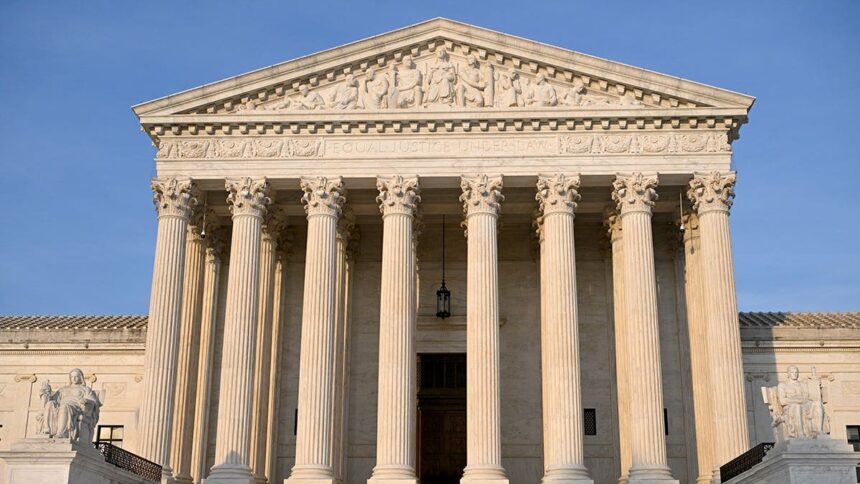
Still, there are many reasons why, come every June or at latest early July, most of the nations news media focuses on the decisions flowing out of One First Street, N.E., Washington, D.C. As a republic of laws, the nations highest court makes decisions impacting every American as we are equal before the law. The most difficult cases it accepts and decides matter to our 330 millions. The news media â legacy and “new” alike â love the storylines.
DEMOCRATIC SENATOR CLAIMS GOP ‘STOLE’ TWO SCOTUS SEATS IN 2016, 2020, CALLS FOR EXPANSION
“SCOTUSblog” has thus become an extremely useful gathering place for Court watchers of all sorts, but especially for non-lawyers trying to make sense of the end-of-term rush of decisions. That goes double for laymen trying to figure out if the Court is shifting hard-right or hard-left on many issues or even some.
“By several measures, this term was more ideologically divided than the last one,” Jake Truscott and Adam Feldman wrote for the SCOTUSblog platform on the first day of this month. “Last term, 15.2% of the courts decisions were decided by a 6-3 vote, and 9% of all decisions were 6-3 ideological splits. This term, those figures rose significantly, to 28.8% and 22.7%, respectively.”
So the Court has shifted “rightward” a bit, but of all of its cases resulting in opinions, only a little more than a fifth are decided along the divide of “originalists” v. “living Constitutionalists.” (The “originalists” are Chief Justice John Roberts and Justices Clarence Thomas, Samuel Alito, Neil Gorsuch, Brett Kavanaugh and Amy Coney Barrett. Of those six, Roberts, Barrett and Kavanaugh are often grouped together as “moderates.” The “liberal” justices are Justices Elena Kagan, Sonia Sotomayor and Ketanji Brown Jackson.)
NPR RETRACTS FALSE REPORT CLAIMING JUSTICE SAMUEL ALITO IS RETIRING FROM THE SUPREME COURT
The Court issued 67 majority opinions this term, though it actually makes hundreds of smaller decisions throughout the Court year that begins in October and ends (usually) as June closes.
“The justice-level data reinforces this picture of a court still organized around a conservative center, but not operating in a purely ideological pattern in every major case,”