WASHINGTON â One of the Islamic State terror groups most senior leaders is dead, killed in what U.S. and Iraqi officials describe as a joint operation.
Iraqi Prime Minister Mohammed Shia al-Sudani was first to share word of the successful counterterrorism strike, announcing on social media Friday that the countrys intelligence service successfully eliminated IS deputy caliph Abdallah Makki Muslih al-Rufayi.
Sudani, posting on X, called the death a significant security achievement.
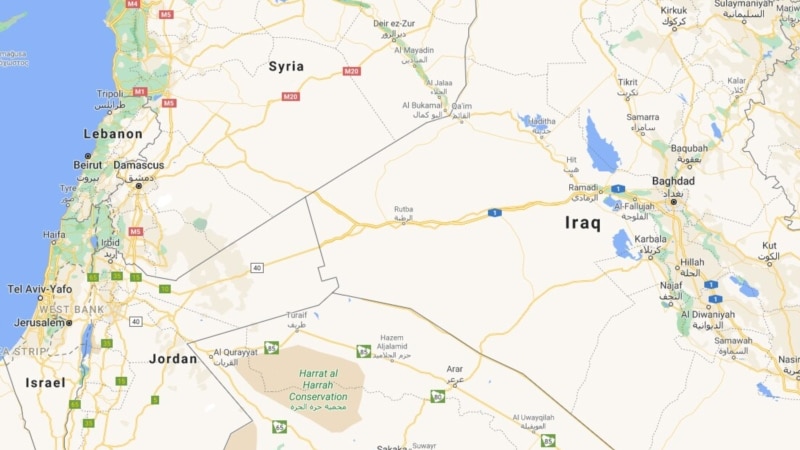
Iraqi special forces, in a subsequent post on the X social media platform, said al-Rufayi was killed Thursday in an airstrike targeting his location in Iraqs Anbar desert.
U.S. President Donald Trump later confirmed al-Rufayis killing in a post on his Truth Social platform.
Today the fugitive leader of ISIS in Iraq was killed. He was relentlessly hunted down by our intrepid warfighters, Trump wrote, using another acronym for the terror group. His miserable life was terminated, along with another member of ISIS, in coordination with the Iraqi Government and the Kurdish Regional Government.
U.S. Central Command, which oversees U.S. military operations in the Middle East, said al-Rufayi was killed in a precision airstrike Thursday, and that his body was later positively identified using DNA recovered during a previous raid in which the IS emir escaped.
Central Command also said al-Rufayi and the second IS official had been wearing suicide vests at the time of their deaths and had been carrying multiple weapons.
Iraqi officials said the strike was the result of a two-year effort to track al-Rufayis location, with signifcant breakthroughs coming in the past six months.
The officials also said they arrested seven additional IS members, including two women, in a follow-up operation in Anbar. Intelligence collected at the scene of the airstrike further led to the arrest of another five people in the northern Iraqi city of Irbil.
Iraqi officials said that al-Rufayi, also known as Abu Khadija, was the top IS official for Iraq and Syria, and that he also played a key role in the groups external operations.
A recent United Nations report, based on intelligence from U.N. member states, said al-Rufayi ran IS operations across Iraq, Syria, Turkey and other parts of the Middle East.
Other U.N. intelligence reports have identified al-Rufayi as a member of IS delegated committee, viewed as the terror groups most influential executive body.
U.S. officials have yet to comment on the Iraqi claims.
Various intelligence estimates put the number of IS fighters across Iraq and Syria at between 1,500 and 3,000, with the majority operating out of Syria.
U.S. military officials warned in July of a possible IS resurgence in the region, saying the terror group was on a pace to more than double the number of attacks it had carried out in Iraq and Syria the previous year.
More recently, in December, U.S. forces carried out a series of airstrikes against IS in Syria, hitting targets in areas abandoned by counterterror forces loyal to former Syrian president Bashar al-Assad.
Despite those operations, intelligence shared by the U.N. indicated IS has been trying to take advantage of the fall of the Assad regime and resulting political turmoil.
The U.N. report also said IS maintained the ability to operate and replace field commanders.
Yet while Iraq and Syria are central to IS founding ideology, there has been a growing consensus among intelligence officials and experts that the terror group no longer sees the Middle East as its base for global operations.
Officials, including those from the U.S., have said there is growing confidence that the group is now being led by Abdul Qadir Mumin, who has been based in Somalia, where he rose to prominence as the emir of the groups Somali affiliate, IS-Somalia.
An offensive launched by forces in Som