


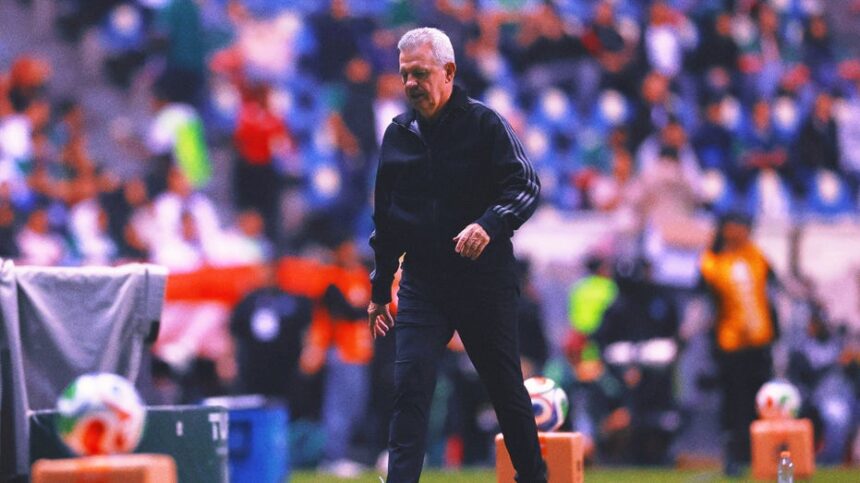
When Javier Aguirre was a player, he believed Mexico’s grueling, year-long training camp ahead of the 1986 World Cup was the key to El Tri’s run to the quarterfinals â matching its best result.
As coach of the national team, he is trying to replicate that vintage formula.
Unlike most competing nations, which must wait for domestic leagues to conclude before gathering their squads, Mexico began assembling its players more than a month before its opening World Cup match on June 11 against South Africa â pulling them away from their teams while the Liga MX was ongoing.
“This is a project, not a whim â its a project to try and make this a great World Cup,” Aguirre says. “We concluded that being at home and having these magnificent facilities we needed to be well prepared in every way. This meant having them ready five weeks before the World Cup.”
The 67-year-old manager, steering Mexico into the World Cup for a third time, was an integral part of the 1986 squad that beat Belgium and Bulgaria and lost to eventual finalist West Germany in a penalty shootout in the quarterfinals.Â
The only other time El Tri reached that stage was in 1970, also on home soil.
“Being part of the national team and being able to play in a World Cup at home is priceless,” Aguirre says of the 48-team tournament that Mexico is co-hosting with the U.S. and Canada.
Modern soccer presents challenges that didnt exist in 1986. While that Mexico squad featured only one Europe-based star â Real Madrid icon Hugo Sánchez â the current pool boasts 14 players competing in Europe.
To secure his domestic players early, Aguirre had to convince the owners of the 18 Liga MX first-division teams that an extended camp was the only way to truly stand out at home. His blueprint was approved last December, and the gates to the training ground opened on May 6 with an initial group of 12 domestic players.
Yet, the strategy has drawn criticism from prominent figures within Mexican football, most notably former national team manager Ricardo La Volpe, who led El Tri to the round of 16 at the 2006 World Cup in Germany.
“Im truly surprised, and I have a lot of respect for Javier Aguirre, but I dont understand him for one simple reason: First, he doesnt have most of the players, making the practices meaningless,” La Volpe argued. “I would say that if you cant work with everyone you should let the players use the domestic playoffs to maintain their match rhythm.”
Because of the staggered arrivals, Aguirre initially had to bring in youth academy players as sparring partners to fill out his training sessions. Behind the scenes, however, the manager utilized his deep network and public relations savvy to persuade some European clubs to release their Mexican players ahead of schedule.
The politicking paid off. By early last week, Aguirre had 18 of his final 26 players available for a warmup match against Ghana, which Mexico won 2-0.
Mexicos intensive preparation continues with friendlies against Australia on Saturday in Pasadena, California, followed by a final test against Serbia in Toluca on June 4 â just one week before the spotlight turns to the high-stakes World Cup opener against South Africa at Azteca Stadium. Mexico also faces South Korea and the Czech Republic in Group A.
At the 2022 World Cup in Qatar, Mexico failed to advance from its group.
To ensure optimal preparation, the Mexican Football Federation invested 400 million pesos ($23 million) into a massive renovation of its elite training center, the Centro de Alto


